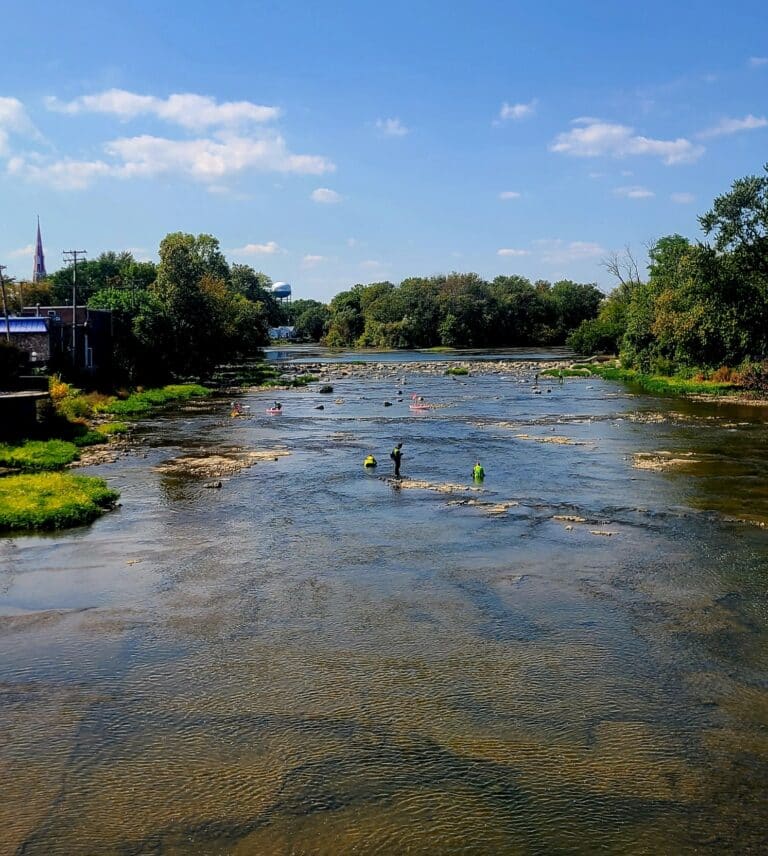

The City of Monroe, Michigan, is one of 48 designated Great Lakes Areas of Concern (AOCs), where legacy pollution and habitat degradation have resulted in multiple beneficial use impairments (BUIs), including restrictions on fish consumption, recreational use, and overall water quality. To advance toward delisting, the city of Monroe has implemented numerous restoration projects, such as dam removals and fish passage improvements. But when inspections revealed structural failures and diminished ecological function at several sites, the city turned to ECT for engineering expertise with a long-term restoration strategy.
Our team inspected five dams and a restoration site along the river, evaluating their condition and how well they allowed fish and other wildlife to move freely through the watershed. Based on these findings, ECT helped the city secure roughly $3 million in National Oceanic & Atmospheric Administration (NOAA) funding through grant writing, scoping, and administration support. This particular grant includes the removal of Dam #4, redirecting a sanitary line running through the dam, and modifying the dam immediately upstream (Dam #5) to provide a more sustainable solution to fish passage. ECT’s services span barrier ranking, design and permitting, LIDAR-based elevation analysis, survey delineations, and routine site assessments. Additionally, ECT developed the River Raisin Master Plan to guide post-delisting restoration, community engagement, and conservation initiatives. Working alongside the River Raisin Watershed Council, this plan will help strengthen habitat connectivity and long-term resilience for the river ecosystem.
This multi-year effort continues to build on that connectivity work, improving fish passage and long-term ecosystem resilience across the River Raisin corridor. By removing barriers and enhancing restoration sites, the project supports the City of Monroe’s progress toward AOC delisting.